The Preamble to the United States Constitution is a brief introductory statement of the fundamental purposes and guiding principles which the Constitution is meant to serve. In general terms, it expresses the intentions of its authors. On occasion, courts have referred to it as reliable evidence of what the Founding Fathers thought the Constitution meant and what they hoped it would achieve!
This blog is all about the 2010 election and taking back our country One VOTE at a time!
Mark's producer Sean here. Hi everyone!
The radio show opening monologue on 7-22-2012 regarding the CO murders
is getting significant national attention. Mark has been busy discussing
his commentary on various national radio programs including Janet
Mefferd, Lars Larson, Rusty Humphry, etc. since the show aired. Please
listen and share!
On Sunday July 22,2012 Armed American Radio
Show host Mark Walters commented on Gun Control and Evil People in this
world. This is the best Radio Monologue' s I've every heard! He was right on point! Evil is among us and we can't do anyting about it! Mark was commenting on the Evil that was unleased in Aurora Colorado on July 20,2012
Colorado news, US news, breaking national news, "news headlines, breaking stories, US headlines, national coverage, Huffington Post, Washington Post, Bloomberg, Wall Street Journal, CNN FNC Fox News, New York Daily News, New York Times, MSNBC, The Ed Show, 2012 Election, ;university of arizona, virginia tech, Google news Evil Nbc Abc Bbc Radio Interview talk politics, trending, News, trend setter, trending Up, @edshow @maddow @Lawrence @msnbc @Morn #hunting #pistols #secondamendment #gunrights #GunControl #bradybuzz #MikeBloomberging_J #trending #news #Newsnight #BREAKINGNEW So
I made one misassumption in my introduction--the guns found at the murder scene of Border Patrol Agent Brian Terry traced back to Lone Wolf Trading Company in Glendale, AZ, not Dallas, TX, as Gun Rights Examiner demonstrated in a Feb. 9, 2011 post, presenting--at the time--an exclusive on a detailed document obtained from a confidential source that included traced purchase information. The confusion over Texas is understandable, as that's where the gun that killed ICE Agent Jaime Zapata was traced back to, and indeed, as we've seen time and again here at Gun Rights Examiner and at Mike Vanderboegh's Sipsey Street Irregulars blog,
The Wells Report Technical Director and Videographer Sean Young visited Fabian Gordon at his home to view the Gordon Lights. After hearing him on The Wells Report yesterday Sean was compelled to find out what made Fabian and Ellen Gordon decide to open their home to a wonderful Christmas Light/Music Display and accept donations to Operation Homefront of Texas! You Also donate at http://www.operationhomefront.net/texas/
The lights and music stay up until January 6th! Visit http://gordonlights.com/ for more information and years past videos.
This Is a Interview I conducted with David Codrea Sipsey street irregulars and David Codrea where the first reporters to break the Gun Walker Story here is a ARMED AMRECIAN RADIO EXCLUSIVE
David Codrea of Gun Rights Examiner has broken the story about a program in Indiana that allowed the illegal sale of weapons to convicted felons and gang members who then allegedly transported them to Chicago where they were distributed to other gang members. This was all arranged and approved by the ATF, according to information received by Codrea. At least one gun dealer agreed to cooperate with ATF agents, who also made arrangements with the FBI background check system and fixed it so the queries would go through when the gun dealer contacted them as required by law. This allowed the sales to proceed, even though the buyers were convicted felons and gang members.
As I sit here watching the Sunday Morning Political Talk Shows I just have to shake my head with disbelief!
Now maybe I'm just lost but I can't understand how you can raise the debt but not adjust your spending, better yet if you cut the spending you should not have to raise the debt!
The U.S. Government CAN cut spending with out raising taxes and cutting social programs.
First here are things we can CUT
1.TSA'S budget - instead of cutting we are allowing The TSA to start working in train stations REALLY!
2.The Department Of Education - each State has a DOE so why do we need a federal version of the same do nothing thing.
3.THE ATF - This corrupt agency should have been gone WHAT A JOKE SERIOUSLY!
4. CUT RESEARCH FUNDING - I'm not talking about Cancer or health Research. I'm talking about Research like the mating habits of the shrew or what ever the animal you want to put in it's place CAN SOMEONE TELL ME WHY WE NEED TO KNOW HOW ANIMALS MATE? IF YOU REALLY NEED TO KNOW JUST GET A FEMALE AND A MALE DOG AND SIT BACK WITH A CUP OF COFFEE AND YOU WILL KNOW!
5. Let's look at all of the PET PROJECTS that Congress has and cut stuff like BRIDGES TO NO WHERE!
This is just a few things that we can start with.
I Keep hearing the PROGRESSIVE LEFT MEDIA say tax the rich ($250,000) rich they want you to believe that if you make $250,000 or more you should be taxed more. And in the same newscast I hear we need to produce new job's!
BUT YET THE SAME PEOPLE CHEERED WHEN THE HEALTHCARE PLAN WAS PASSED!
How do you except new JOBS when companies have to pay for Healthcare for the employees they have on the payroll let alone new hires.
Very few companies will hire until the healthcare bill is in place so they can factor in the cost that is just good business sense.
Bottom line is that President Obama talked about people having to cut back a sacrifice with turning up the thermostat and not driving SUV's well he needs to take his on advise.
Testimony opens today, the public can use the internet, to continue to watch the Casey Anthony trial unfold live. Several news stations in the local area of the trial being held in Orlando Florida are sending out the video feed from their web sites. Casey Anthony is on trial for the murder of her 2 year old daughter Caylee Anthony. Coverage of the trial can been viewed as it happens while court is in session. The trial is being held Monday through Saturday from about 9:30 AM to about 5:00 PM, breaking for lunch from 12:00 to 1:30PM eastern.
Tonight we talk toMr. David Codrea - David Codrea is a long-time gun rights advocate and writer. A featured columnist for Guns Magazine, his articles and his online journal, The War on Guns , defiantly challenge the folly of citizen disarmament. Email him at dcodreaAThotmailDOTcom
The Indy Radio Factor will be live tonight at 10:05 pm Click Here to listen..
CBS News reveals that "Project Gunrunner," an ATF operation that aims to stop the flow of weapons from the U.S. to Mexican drug cartels, has allegedly facilitated the delivery of thousands of guns into the hands of criminals. Often bought with cash, and sometimes brought in paper bags, sources tell CBS News that several gun shops wanted to stop the questionable sales, but were encouraged to continue selling by the ATF, so that they could continue gathering intelligence and see where the weapons ended up. This dangerous tactic is referred to as letting the guns "walk."
After watching years of reports of U.S. firearms turning up in the hands of Mexican Drug Cartels as an attempt to clamp down on the 2nd Amendment, the ATF has been exposed as selling directly to those same cartels via 'Project Gun Runner'.
More Blood on the hands of the Federal Government...
ATF, DOJ Launch Damage Control Effort Over Growing Project Gunrunner Scandal
We will have David Codrea on the Indy Radio Factor to talk about this story...
The following is a summary and time line of articles appearing on the Sipsey Street Irregulars blog and Gun Rights Examiner, reflecting original reporting on the developing "Project Gunwalker" story by Mike Vanderboegh and myself. That's the purposely ironic name I assigned it, a parody of the Bureau of Alcohol Tobacco, Firearms and Explosive's "Project Gunrunner," and it refers to allegations by whistleblowing ATF insiders that:
ATF management was allowing potentially hundreds of semiautomatic firearms to be walked across the Mexican border in order to pad statistics used to further budget and power objectives.
Mexican authorities were kept in the dark, and protests that they should be informed were overridden, first by the Phoenix ATF office, and ultimately by higher-ups in Washington, DC.
A gun used in this operation was involved in a December 2010 incident in which a Border Patrol agent was killed.
The original allegations were posted on CleanUpATF.org. Vanderboegh and Codrea, who have a history going back years of documenting allegations posted there, and pressing for congressional hearings to investigate the claims, were both contacted independently by various ATF insiders claiming to have corroborating information and documentation.
Mike vetted his sources and David used his contacts to help validate that David's informant was who he represented himself to be. Mike and David did what they could throughout their separate and coordinated investigations to test and corroborate what was being told.
OK the closer we get to the 2012 Election I have come to the conclusion the Republican Party will do the same thing this election that they did in the 2008 Election!
A BIG NOTHING WITH THE SAME TIRED OLD MESSAGE AND A BUNCH OF HAPPY JOY JOY RHETORIC....
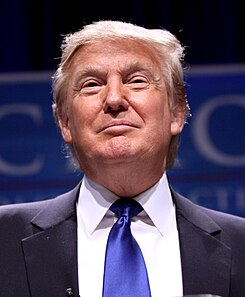
Maybe I'm just off base here but can someone tell me what has Trump done to be President!
(I'm just saying)
The only thing that I've heard from The Donald is the birther argument PEOPLE THAT IS NOT A REASON TO VOTE A PERSON INTO OFFICE!!!!
Let's say the birther movement revials that President Obama was not born in the U.S. do you really think that the people whom have worked to get him elected would change anything?
Not going to happen...
For the people who are going to argue with me about this lets look at the past.
Over 70% of Americans where against the healthcare plan but it happened, people where against the bail out plan that both Presidents Bush and Obama did but it happened! So if you look at the past nothing will happen.
Now with that being said I think that people should challenge anything they don't agree with including the birther question, our Constitution give anyone the right to a voice and I don't want to take that away from anyone.
If the birther question is the reason that people would vote for The Donald then the Republican Party is doomed in this next Election.
MR TRUMP ON FOX NEWS
Now back to the new Republican kid on the block. Lets look at his past.
Financial problems (1989–1997)
By 1989, the effects of the recession left Trump unable to meet loan payments. Trump financed the construction of his third casino, the $1 billion Taj Mahal, primarily with high-interest junk bonds. Although he shored up his businesses with additional loans and postponed interest payments, by 1991 increasing debt brought Trump to business bankruptcy and the brink of personal bankruptcy. Banks and bond holders had lost hundreds of millions of dollars, but opted to restructure his debt to avoid the risk of losing more money in court. The Taj Mahal re-emerged from bankruptcy on October 5, 1991, with Trump ceding 50% ownership in the casino to the original bondholders in exchange for lowered interest rates on the debt and more time to pay it off.
On November 2, 1992, the Trump Plaza Hotel was forced to file a prepackaged Chapter 11 bankruptcy protection plan after being unable to make its debt payments. Under the plan, Trump agreed to give up a 49% stake in the luxury hotel to Citibank and five other lenders. In return Trump would receive more favorable terms on the remaining $550+ million owed to the lenders and retain his position as chief executive, though he would not be paid and would not have a role in day-to-day operations.
By 1994, Trump had eliminated a large portion of his $900 million personal debt and reduced significantly his nearly $3.5 billion in business debt. While he was forced to relinquish the Trump Shuttle (which he had bought in 1989), he managed to retain Trump Tower in New York City and control of his three casinos in Atlantic City. Chase Manhattan Bank, which lent Trump the money to buy the West Side yards, his biggest Manhattan parcel, forced the sale of a parcel to Asian developers. According to former members of the Trump Organization, Trump did not retain any ownership of the site's real estate - the owners merely promised to give him about 30 percent of the profits once the site was completely developed or sold. Until that time, the owners wanted to keep Trump on to do what he did best: build things. They gave him a modest construction fee and a management fee to oversee the development.
Now The Donald has made a big come back and I really like Mr. Trump but not for President...
Bottom line for a Republican Party win the Party will need to focus on the Economy, Jobs, The U.S. Debt, AND A NEW MESSAGE NOT THE SAME ONE FROM THE MID 80'S and reaching out to Black and Hispanic voters. (I will post a blog about this later this week)
It's time for the Republican Party put it's big boy pants on, stop with the ADHD MENTALITY and come together with a real agenda that has solutions PERIOD ENOUGH SAID...




 Posts
Posts

